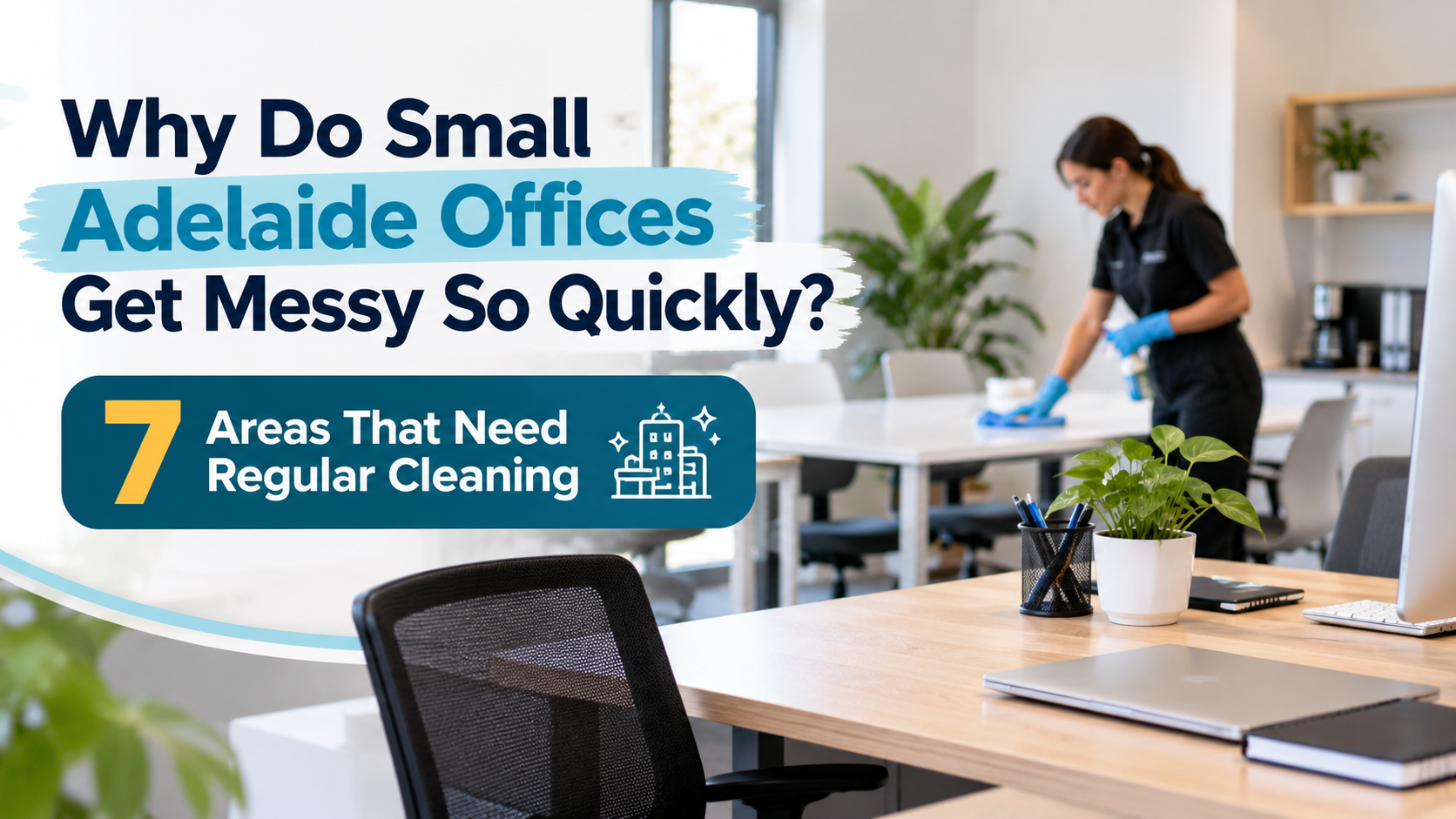
Small offices get messy fast because everyone uses the same few spaces, all day, with no one clearly in charge of cleaning them. Five people in a 60-square-metre office put more wear on the kitchenette, bathroom and desks than most people expect.
We hear the same story a lot. The office looked fine on Monday. By Thursday there’s a sticky bench, a full bin and a keyboard nobody wants to touch.
Here’s why it happens, and the seven areas that need regular attention.
Why Small Offices Get Dirty Faster Than You’d Think
A small office has less space to spread the mess out. Every spill, crumb and coffee ring lands somewhere people will see it or touch it.
Three things usually drive it:
- Shared everything. One kitchenette, one bathroom, one printer. Every person touches the same surfaces.
- No clear owner. When cleaning is everyone’s job, it often becomes nobody’s job.
- Long hours indoors. People eat lunch at their desks, drink coffee through the day and bring in dust and dirt on their shoes.
None of this means your team is messy. It just means a small space needs a simple routine to keep up.
The 7 Areas That Need Regular Cleaning
| Area | Why it gets dirty | Suggested rhythm |
|---|---|---|
| Desks and tech | Food, drinks, constant touching | Wipe daily |
| Kitchenette | Spills, food, shared appliances | Wipe daily, deeper weekly |
| Bathrooms | High use, moisture | Daily check, full clean several times a week |
| Shared touchpoints | Handles, switches, buttons | Wipe a few times a week |
| Floors and entry | Dirt tracked in from outside | Vacuum several times a week |
| Bins | Food waste, odour | Empty daily |
| High and hidden spots | Dust settles where nobody looks | Monthly |
These are practical starting points, not rules. A busy five-person office will need more than a quiet two-person one.
1. Desks and Tech
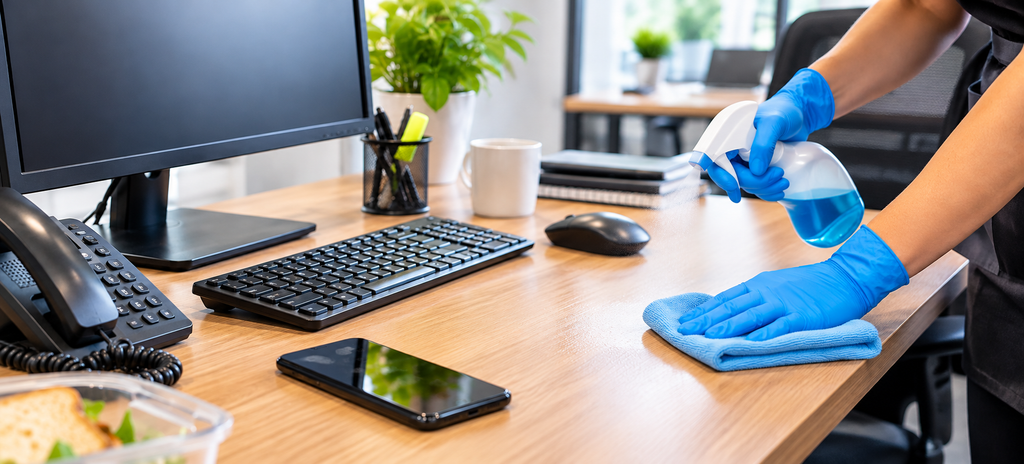
Desks, keyboards, mice and phones collect the most crumbs, skin oils and spills because people use them for hours at a time.
Lunch at the desk is the main culprit. Crumbs fall between keys, and phone handsets and mice pick up grime from hands all day.
Use a lightly damp cloth, not a soaking one, and check your device maker’s advice before using any cleaning spray on screens.
2. The Kitchenette
The kitchenette is usually the messiest spot in a small office, because food, water and shared appliances all meet in one corner.
Think microwave splatter, a fridge with mystery containers, and a sink with one mug too many. The microwave and fridge handles get touched by everyone.
A quick wipe of the bench and sink each day stops buildup. Clear out the fridge weekly, ideally on the same day each time so people know when to take their lunch containers home.
3. Bathrooms
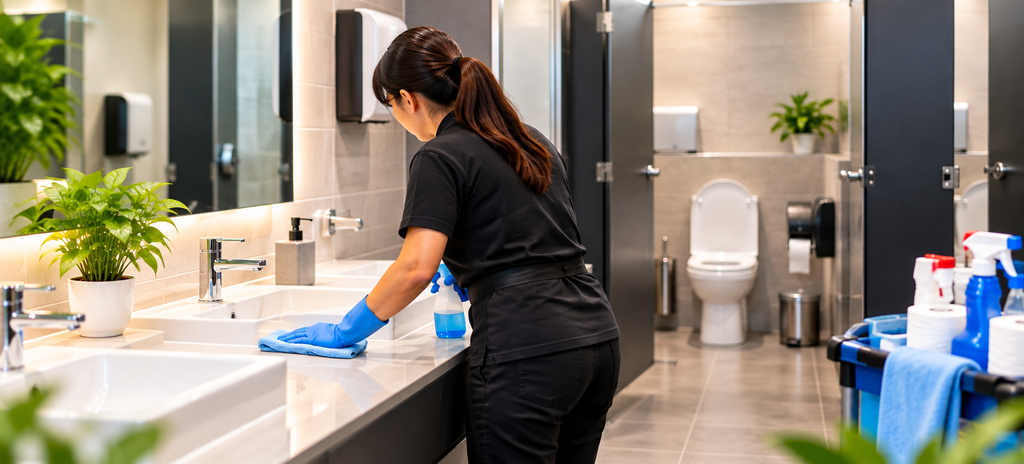
Office bathrooms need the most frequent cleaning of any area, because they’re used by everyone and stay damp.
Moisture plus heavy use means soap scum, marks and odours show up quickly. Even a small two-cubicle bathroom can look rundown by midweek if it’s only cleaned once.
Restock soap and toilet paper at the same time as you clean, so nobody is caught short.
4. Shared Touchpoints
Door handles, light switches, printer buttons and the kettle handle are touched by everyone, which makes them easy to forget and easy to contaminate.
You don’t notice these surfaces until they’re sticky. They don’t look dirty, so they rarely get wiped.
Make a short list of your office’s touchpoints and wipe them on a set day. It takes a few minutes and makes the whole space feel fresher.
5. Floors and Entry Areas
Floors get dirty from the entrance inward, because shoes carry in dust, grit and moisture every time someone walks through the door.
A good entry mat catches a lot before it spreads across the carpet or hard floor. Shake or vacuum the mat regularly, otherwise it just holds onto the dirt.
Carpet in a small office can hold a surprising amount of dust. If it’s looking flat, dull or smelly, it may be time for a deeper clean rather than just another vacuum.
6. Bins
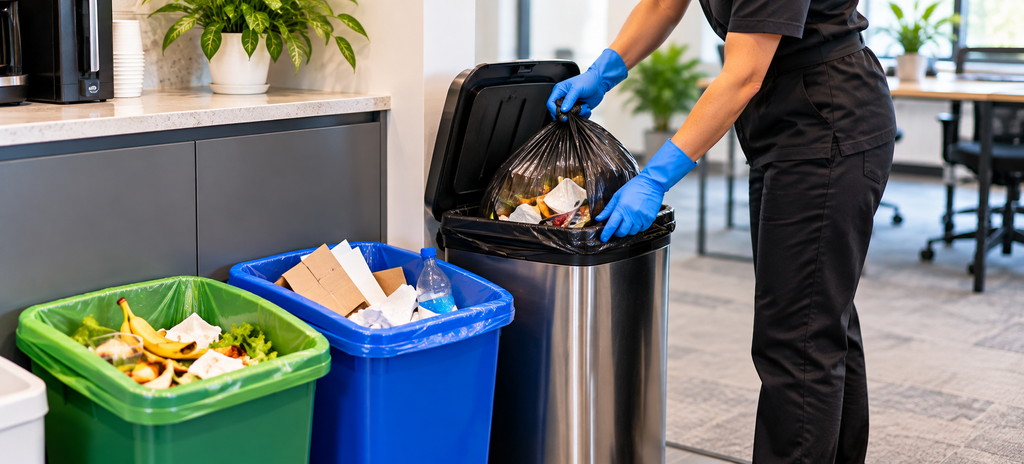
Bins are the fastest way for an office to start smelling, especially when food waste and general rubbish share one bin.
Empty them daily, and don’t let a bin sit overnight if it has food scraps in it. Wipe the inside of the bin now and then, because spills at the bottom cause most of the smell.
Separate bins for food waste and paper make a big difference to both smell and tidiness.
7. High and Hidden Spots
Dust settles on vents, blinds, window ledges, monitor stands and the tops of cabinets, and these spots are rarely cleaned until the dust is obvious.
These areas matter because the dust doesn’t stay put. It drifts back into the air and onto your desks.
A monthly dust of these spots, working from high to low, keeps it from building up. Cleaning from the top down means you don’t dust something and then drop more dust onto it.
What a Simple Weekly Routine Looks Like
You don’t need a complicated system. Here’s a basic split that works for most small offices:
- Daily (5 to 10 minutes): Wipe the kitchenette, empty bins, quick desk tidy
- A few times a week: Vacuum main walkways, wipe touchpoints, check the bathroom
- Weekly: Clear the fridge, mop hard floors, clean the bathroom properly
- Monthly: Dust high spots, vents and blinds, check carpets and entry mats
Pick one person to check the list each week, or rotate it. Written down, it’s far more likely to happen.
When It’s Time to Call in Professionals
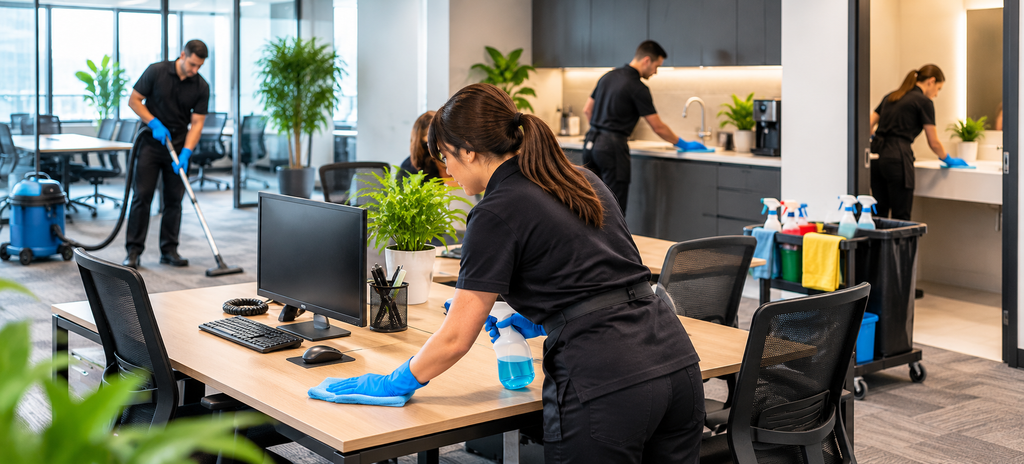
A shared roster works until the office gets busier or the list gets longer than the time anyone has. That’s usually the point where cleaning starts slipping.
You’ll probably want outside help when:
- Staff are spending lunch breaks or evenings cleaning
- Bathrooms and kitchenettes are cleaned irregularly
- Carpets and hidden spots haven’t been looked at for months
- Visitors or clients are coming in and the office needs to look its best
Professional cleaning services Adelaide offices use can work after hours, so there’s no disruption to your team. Adelaide Cleaning Company provides commercial cleaning for offices, with after-hours options and regular arrangements available, and our cleaners are police checked and fully insured. If you want a hand getting on top of things, our deep cleaning services Adelaide offices use are a good reset before moving to a regular schedule.
A quick note for home-based workers: if your office is a spare room, the same ideas apply. Many people fold it into their regular house cleaning Adelaide routine, and if you already book home cleaning Adelaide providers for the rest of the house, it’s worth asking them to include the desk, floor and dusty shelves in that room too.
How to Choose a Cleaning Company
Cost is only one part of the decision. Before you pick a cleaning company Adelaide businesses can rely on, ask:
- Are they insured, and can they confirm it?
- Are their cleaners police checked or background checked?
- Can they clean after hours?
- Do they give you a clear price before work starts?
- Do they have flexible arrangements, or lock you into a long contract?
If the answers are vague, keep looking. A good company will be happy to explain how they work.
FAQ
Why does my small office get dirty so quickly?
A small office has fewer surfaces and more people using them, so mess builds up faster. Shared kitchens, bathrooms and touchpoints are used by everyone, and eating at desks adds crumbs and spills throughout the day.
How often should a small office be cleaned?
It depends on size and use. Most small offices do well with daily light tidying (bins, kitchen, bathroom check) plus a thorough clean once or twice a week. Busier offices or those with clients visiting may need more.
What areas of an office get the dirtiest?
Kitchenettes, bathrooms, desks and shared touchpoints like door handles and printer buttons usually collect the most grime. Floors near the entrance also get dirty quickly because shoes bring in dust and moisture.
Is it better to hire a cleaner or have staff do it?
Staff cleaning can work for tidying and wiping, but it often slips when people get busy. Hiring a professional takes the job off your team and usually results in a more consistent standard, especially for bathrooms, floors and deeper cleaning.
What should I look for in an office cleaning company?
Look for confirmed insurance, police or background-checked cleaners, a clear price before work starts and flexible scheduling. After-hours cleaning is useful for avoiding disruption. Ask how they handle the areas that matter most to your office.
Can the same company clean my office and my home?
Some can. Adelaide Cleaning Company offers both residential and commercial cleaning, so you can ask about both if that suits you.
Get Started
A messy office isn’t a sign of a bad team. It’s usually a sign that the cleaning plan hasn’t kept up with how the space is actually used. If you’d like a hand, Adelaide Cleaning Company can look at your office and suggest a schedule that fits your size, hours and budget. Tell us what’s bothering you most, and we’ll let you know honestly what’s worth cleaning and how often.